May 2025 | Sam's Club Supply Chain News
As of 2025, Sam's Club has officially updated its pallet policy, requiring all inbound shipments to arrive on block-style pallets. This move follows similar requirements already in place at Costco, which accepts only CHEP and PECO branded block pallets.
If you're a supplier shipping to Sam's Club, this change is critical. But if you're in the broader pallet market, it's important to know: stringer pallets are still widely used across the supply chain—and much more affordable.
What Changed?
Sam's Club now requires block pallets only for all products delivered to its distribution centers. These pallets must meet specific size, strength, and handling specs suitable for automated warehouses.
This doesn't mean stringer pallets are banned across the industry—far from it. It simply means that if you want to sell into Sam's Club, your pallets must be compliant with their automation standards.
Why Sam's Club and Costco Use Block Pallets
Both Sam's Club and Costco have invested heavily in automated material handling systems. These systems rely on pallets that are:
- Uniform in size and weight
- Accessible from all four sides
- Built strong enough to reduce damage during handling
Block pallets are the clear fit for these requirements. That's why Costco uses CHEP and PECO block pallets—and now Sam's Club is following suit.
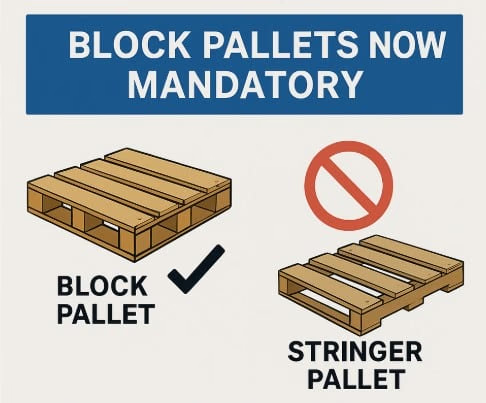
What's the Difference? Block vs. Stringer Pallets
Let's break this down simply:
Block Pallets
- Stronger design with square blocks in each corner
- Forklift and pallet jack access from all four sides
- More consistent for automation
- Used by retailers like Sam's Club, Costco, and Target
- Typically more expensive
Stringer Pallets
- Built with two or three long boards (stringers)
- Usually two-way entry or partial four-way entry
- Cheaper to produce and easier to repair
- Still common in foodservice, industrial, and regional distribution
- Not accepted at Sam's Club or Costco
Should All Suppliers Switch to Block Pallets?
No.
This isn't a call for every supplier in the country to ditch stringer pallets. Stringer pallets remain the standard in many industries, especially where automation isn't a factor and costs need to be tightly controlled.
However, if you're shipping to Sam's Club or Costco, compliance isn't optional. You'll need to:
- Use new or certified block pallets
- Possibly join a pallet pooling program (e.g., CHEP or PECO)
- Make sure your pallets are clean, consistent, and strong enough for automated handling
Conclusion: Match Your Pallet to Your Customer
Sam's Club's 2025 block pallet mandate is part of a broader trend toward automation among big-box retailers. But that doesn't mean stringer pallets are obsolete.
- If you're shipping to automated retailers like Sam's Club and Costco → Use block pallets
- If you're in general manufacturing, foodservice, or B2B → Stringer pallets are still fine (and cheaper)
Bottom line: your pallet type should match where your product is going. One size doesn't fit all—but Sam's Club has made it clear what they expect.